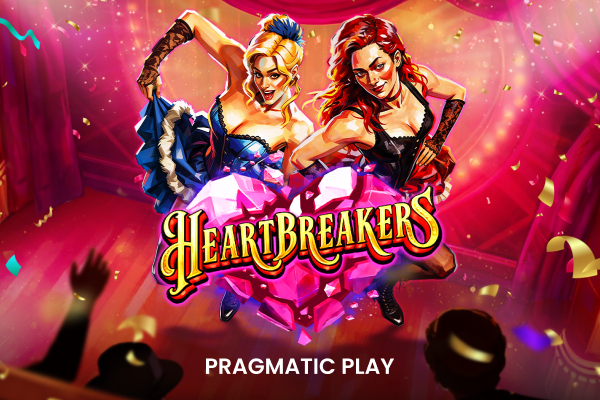
Dance Party
Progressive Multiplier Free Spins · Wild Symbol · Scatter Symbol · Free Spins Retrigger
Dance Party is Pragmatic Play's neon-soaked high-volatility slot that swaps traditional reels for a 5x3 grid and 243 paylines. The standout mechanic—a progressive multiplier that escalates during free spins—creates significant variance in payout distribution, making this a pure volatility play for players comfortable with extended dry spells.
Dance Party Videos
Dance Party Full Review
Dance Party Overview
Dance Party drops you into a disco-themed slot experience built on Pragmatic Play's grid-based engine rather than traditional reel mechanics. The 5x3 layout with 243 paylines immediately signals that this isn't a classic structure—it's designed for symbol adjacency wins across a wider play area. The neon nightclub aesthetic is purely thematic window dressing; what matters mechanically is the interplay between wild symbols, scatter triggers, and the progressive multiplier system that activates during bonus rounds.
How Dance Party Works
The 243 paylines operate across a 5x3 grid, meaning winning combinations form when matching symbols land on adjacent positions rather than strict left-to-right alignment. This approach creates more win opportunities per spin than traditional payline slots, but it's important to understand that more paylines don't guarantee more frequent wins—they simply change the mathematical distribution of outcomes.
Bets range from $0.2 to $100 per spin, giving both conservative and aggressive players entry points. With a high volatility rating (5/5), expect extended periods without significant returns followed by sudden jumps when features activate. The theoretical maximum win of 36,450x stake represents the ceiling under optimal multiplier conditions—this is a mathematical possibility derived from the mechanics, not a realistic outcome expectation.
Dance Party Bonus Features
Wild Symbol — Substitutes for standard symbols to complete adjacent winning combinations. Wild placement on the grid directly affects the payline outcome on that spin, functioning as a standard mechanic rather than a special trigger.
Scatter Symbol — Landing scatters initiates the free spins round. Scatter triggers are the gateway to the slot's most mechanically distinct phase and where the high volatility truly manifests.
Progressive Multiplier Free Spins — This is Dance Party's core distinction. Once free spins activate, a multiplier begins at a base level and increases with each spin, or on certain win events. The multiplier applies to all payline wins during the bonus phase, meaning later spins in the free spins sequence have significantly higher multiplier values attached to any wins that occur. This mechanic is why Dance Party's volatility is extreme—early spins in the feature may generate modest returns, but if the multiplier escalates and a win lands late in the sequence, the payout jumps substantially. The theoretical max win is constructed around a full grid of high-value symbols landing on the highest multiplier level.
Free Spins Retrigger — Landing additional scatters during the free spins round extends the sequence, resetting or adding to your remaining spins. This mechanic can extend the bonus phase indefinitely in theory, though probability makes extended retriggering uncommon. Retriggers don't reset the multiplier—it continues climbing, which is what makes retriggering mechanically interesting rather than merely additive.
The feature combination creates an asymmetric payout curve: early free spins offer minimal returns even with hits, while the final spins carry multiplier values that dwarf base-game volatility. This engineering choice explains why Dance Party ranks at 5/5 volatility—the bonus round isn't just a modifier, it's a complete phase shift in outcome distribution.
RTP and Variance Context
Dance Party offers two RTP variants: 96.5% and 94.5%. The standard 96.5% return sits within the mid-range for Pragmatic Play's portfolio, though with high volatility this percentage applies over hundreds of thousands of spins. In shorter play sessions, variance dominates the math. The 94.5% variant represents a house increase of 2 percentage points—meaningfully different over extended play but negligible over single sessions.
The 36,450x max win ceiling is theoretically possible but depends on aligning multiple conditions: scatter triggers, successful multiplier escalation through all free spins, symbol placement on the highest-multiplier spin, and retriggers extending the bonus far longer than typical. Treating this figure as achievable rather than mathematical curiosity would be misunderstanding how variance works.
Comparison and Positioning
Compared to other high-volatility Pragmatic Play slots like Dark Spiral or Chaos Crew 3, Dance Party's progressive multiplier is more mechanically transparent than hidden modifier systems—you see the multiplier climbing. This makes it less of a "mystery" slot and more of a pure feature-chase experience. If you prefer predictable bonus mechanics to variable ones, Dance Party delivers clarity.
The 243-payline grid format places it closer to contemporary slot design than some of Pragmatic's classic 5-reel structures, making it feel more modern mechanically even if the disco theme is deliberately retro.
Gamble responsibly. Slots are entertainment, not income.
Dance Party Verdict
Dance Party is engineered for players who understand high volatility and accept that bonus features will define session outcomes. The progressive multiplier mechanic is well-executed and creates genuine variance interest, but the slot doesn't offer anything mechanically revolutionary. It's best suited to players with session budgets that can absorb extended dry spells and who view the free spins bonus as the actual gameplay rather than a supplementary feature.