Cubes
Expanding Grid · Middle Multiplier · Free Spins · Sticky Cubes · Color Burst · Cluster Pays
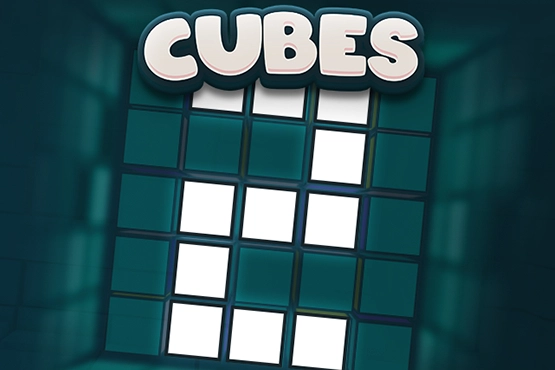
Cubes by Hacksaw Gaming strips slots down to their mechanical essence—a minimalist 5×5 grid where cluster pays and cascading mechanics drive the action. Built on medium volatility with a 96.35% RTP, this puzzle-themed release prioritizes gameplay depth over visual spectacle, rewarding players who understand how expanding grids and sticky mechanics compound.
Cubes Videos
Cubes Full Review
Cubes Overview
Cubes is a deliberate departure from Hacksaw Gaming's action-heavy catalogue. Where titles like Chaos Crew 3 and Fist of Destruction assault the senses with mayhem and narrative, Cubes operates in silence—a retro, minimalist puzzle box where mechanics speak louder than aesthetics.
The 5×5 grid uses cluster-pays rather than traditional paylines, meaning matching groups of identical symbols anywhere on the board trigger wins. This foundation is straightforward, but the feature set transforms it into something considerably more intricate.
How Cubes Works
Spins cost between $0.2 and $100, giving flexibility across bankroll sizes. When a cluster forms, those symbols disappear and new ones cascade down to fill the void—standard cluster-pay behavior. But Cubes layers its complexity through how other features interact with this core mechanic.
The grid itself isn't fixed. The Expanding Grid feature grows the play area beyond the base 5×5, increasing the number of positions available for symbol placement and, theoretically, cluster formation. This is the backbone of the game's variance architecture.
The Middle Multiplier mechanic applies a multiplier to wins that involve symbols in the central column or area of the grid. This creates positional strategy: clusters formed through the middle compound in value differently than edge formations. Over extended play, this subtle bias toward center-weighted wins influences which spins feel substantial.
Cubes Bonus Features
Expanding Grid — The playable grid expands beyond its standard 5×5 size during certain conditions (typically triggered by cascades or specific symbol formations). A larger grid means more symbol positions, altering the probability distribution of cluster formation. This is where high-variance potential emerges, as expanded grids create conditions for larger cascades. This feature resets between spins unless sticky mechanics preserve it.
Sticky Cubes — During free spins or after specific triggers, certain cube symbols remain locked in place across consecutive spins. While other symbols cascade and change, stickies maintain their position, creating intentional cluster pathways. This removes pure randomness and introduces a sequencing element—you know where those symbols are, and you're waiting for cascades to build clusters around them.
Middle Multiplier — Wins formed along or through the central column receive a multiplier boost. The exact multiplier value depends on the specific win configuration, but the mechanic ensures that not all clusters are weighted equally. Players who understand this advantage will naturally focus on cascades flowing through the middle.
Free Spins — Triggered by standard scatter mechanisms or cluster thresholds. During free spins, sticky cubes activate more frequently, and the expanding grid is more likely to deploy, elevating variance. Free spins are where the 3167x theoretical max win becomes mechanically possible—the combination of expanded space, sticky placements, and middle multipliers compounds across multiple cascade cycles.
Color Burst — A feature that activates when clusters of a specific color complete, clearing or boosting symbols of that color across the grid. This creates a secondary mechanic beyond mere cluster elimination: color management. Tracking which color dominates your recent spins becomes tactically relevant.
Cluster Pays — The foundational system. Unlike paylines, clusters reward any touching group of matching symbols, regardless of position. This is mechanically simpler than line-based slots but creates cascading complexity as eliminating one cluster triggers gravity-based refills that generate new clusters. Multiple consecutive cascades from a single spin are possible, and each cascade is an opportunity for the expanding grid or sticky mechanics to apply.
Gameplay Feel and Strategy
Cubes rewards observation. Because sticky symbols telegraph where future clusters can form, and the middle multiplier creates geographical preference, optimal play involves tracking grid state between spins. This differs fundamentally from slots where each spin is mechanically isolated.
The medium volatility (3/5) positioning means the game avoids prolonged drought periods but also caps extended winning streaks. Variance is stable and predictable—neither punishing nor generous. Bankroll durability is reasonable at minimum stakes; risk escalates proportionally with bet size.
Comparable Hacksaw titles like Cubes 2 iterate on this formula with different feature distributions, while games like Itero and Densho explore similar minimalist aesthetics with different mechanics entirely.
No bonus buy options exist, meaning the only path to free spins is organic trigger during base play. This eliminates the premium acceleration mechanic but keeps variance entirely dependent on actual gameplay rather than spend level.
Gameble responsibly. Slots are entertainment, not income.
Cubes Verdict
Cubes is engineered for players who enjoy mechanical depth over sensory intensity. The cluster-pays system combined with expanding grids, sticky placements, and middle multipliers creates genuinely interesting decision-making around spin sequencing and state tracking. The 96.35% RTP and medium volatility position it as stable entertainment rather than a high-variance outlier. This is a thinking player's slot—ideal if you value how a game works over what it looks like.